

An ingrown hair seems like a small thing — a little red bump that itches or hurts — but it can be stubborn, keep coming back in the same spot and leave dark spots and scars behind. If it keeps appearing after shaving or waxing, the problem is not your skin but the way the hair is removed. In this article we explain why ingrown hairs form, how to recognize them, when home care is enough, when to see a doctor and how laser hair removal addresses the cause itself — for the long term.
What is an ingrown hair and what does it look like?
An ingrown hair (Lat. pili incarnati) forms when the hair, instead of growing out through the surface of the skin, turns and keeps growing sideways or back — staying trapped under the skin. The body recognizes the hair as a foreign body and reacts with inflammation.
What does an ingrown hair look like? Most often like a small, raised red or dark bump, sometimes with a visible loop of hair under the surface. It may be tender, itchy, and if it becomes infected — fill with pus (a pustule) and become painful. On darker and more prone skin types, it often leaves behind a dark spot.

Why do ingrown hairs form?
The cause is almost always mechanical — the way the hair is removed. The most common triggers are:
- Shaving, especially with a razor and “against the grain” — the sharp, pointed tip of the hair easily turns back under the skin
- Waxing or tweezing — the hair weakens and next time has a harder time breaking through the surface
- Dry, thickened skin without exfoliation, which “closes off” the hair's exit
- Thick, curly hair and a genetic tendency
- Tight clothing and friction, especially in the intimate area
Daily shaving further dries and irritates the skin, creating a vicious circle: irritation, ingrown hair, more irritation.
Where it most often appears
- Legs (lower legs and thighs) — most often in women, because of shaving and waxing
- Intimate area and groin — because of curly hair, friction and tight clothing
- Underarms
- Beard and neck — most often in men who shave daily
- Buttock area — more often in men
Ingrown hair or pilonidal sinus? When you must see a doctor
It is important to distinguish two things that are often confused in searches:
- An ordinary ingrown hair is a superficial, cosmetic problem resolved with care and, for the long term, laser hair removal.
- A pilonidal sinus is a chronic inflammatory condition in the tailbone area (the intergluteal cleft) with channels under the skin. It is a surgical condition and is not resolved with laser hair removal; it is treated by a surgeon.
See a doctor if you have severe pain, swelling, pus discharge, fever or a recurring change in the tailbone area — that is no longer “just an ingrown hair”. For everything else — recurring ingrown hairs on the legs, intimate area, face and body — there is a simple, long-term solution.
Symptoms and possible complications
An ingrown hair is often more than an aesthetic problem. If neglected, it can cause:
- Inflammation and infection — redness, itching, painful swelling, pustules and abscesses
- Post-inflammatory spots (hyperpigmentation) — dark marks that remain after inflammation, especially on the legs and intimate area
- Scars — with deeper or picked inflammation
Spots and scars from ingrown hairs can be treated separately — more on that below.
How to get rid of ingrown hairs: what helps, and what only postpones the problem
Home care (for mild, isolated cases):
- Gentle exfoliation 2–3 times a week so the skin surface does not close over
- A warm, damp compress to calm the inflammation and help the hair come out
- Don't pick or squeeze — that is the easiest way to cause infection and a scar
What does not address the cause: shaving, wax and tweezers give an immediate result, but each time recreate the conditions for ingrown hairs. Creams and exfoliation ease the consequences, but the hair keeps growing — and the problem with it.
The only way for ingrown hairs to go away for good is to remove the cause itself — the hair. That is where laser hair removal comes in.
The long-term solution: Alma Soprano Titanium laser hair removal
The principle is simple: no hair, no ingrown hair. Laser hair removal targets the hair root and gradually stops it growing, removing the cause of inflammation, spots and ingrown hairs. That is why recurring ingrown hairs and the accompanying pigmentation are considered a medical indication for laser hair removal.
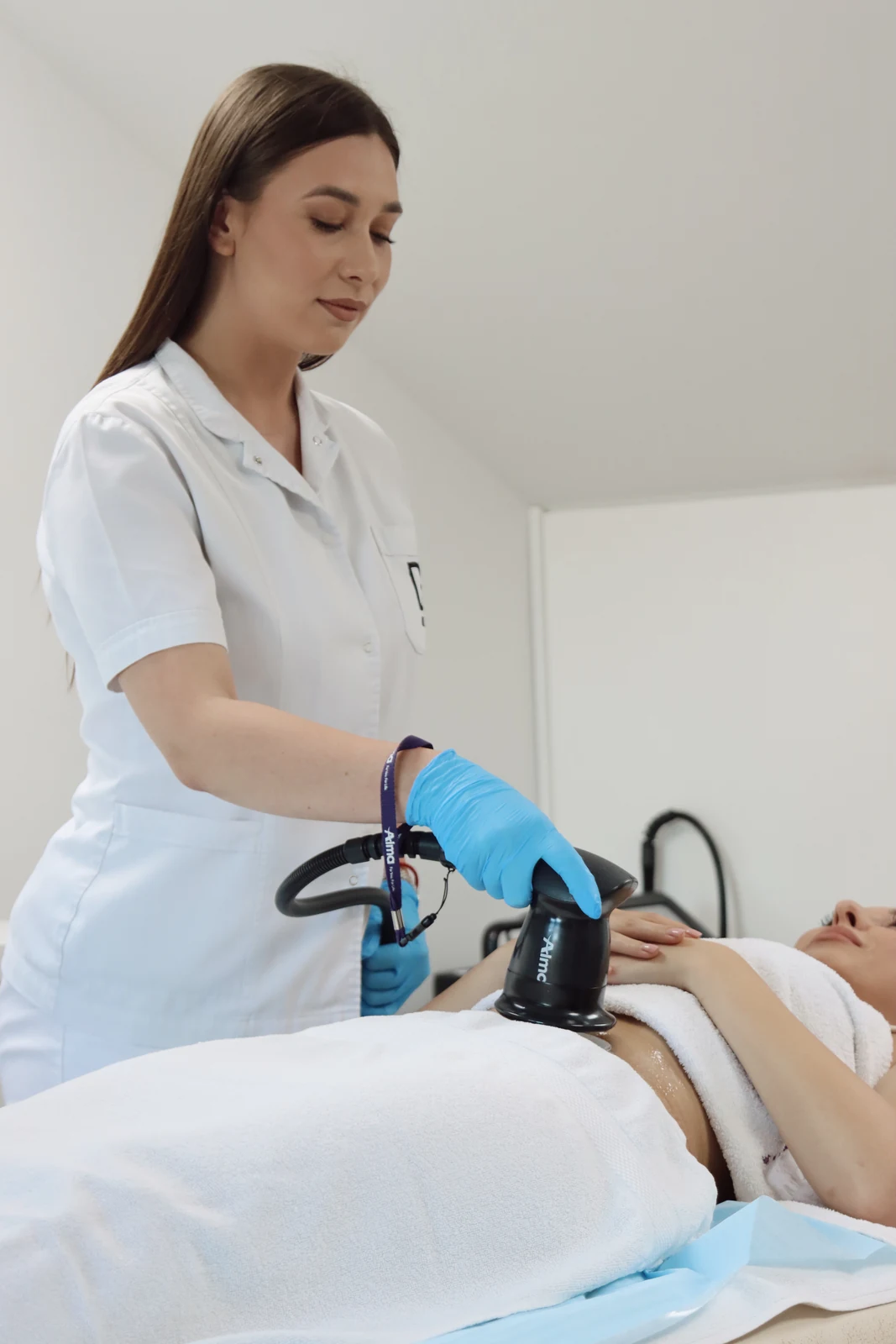
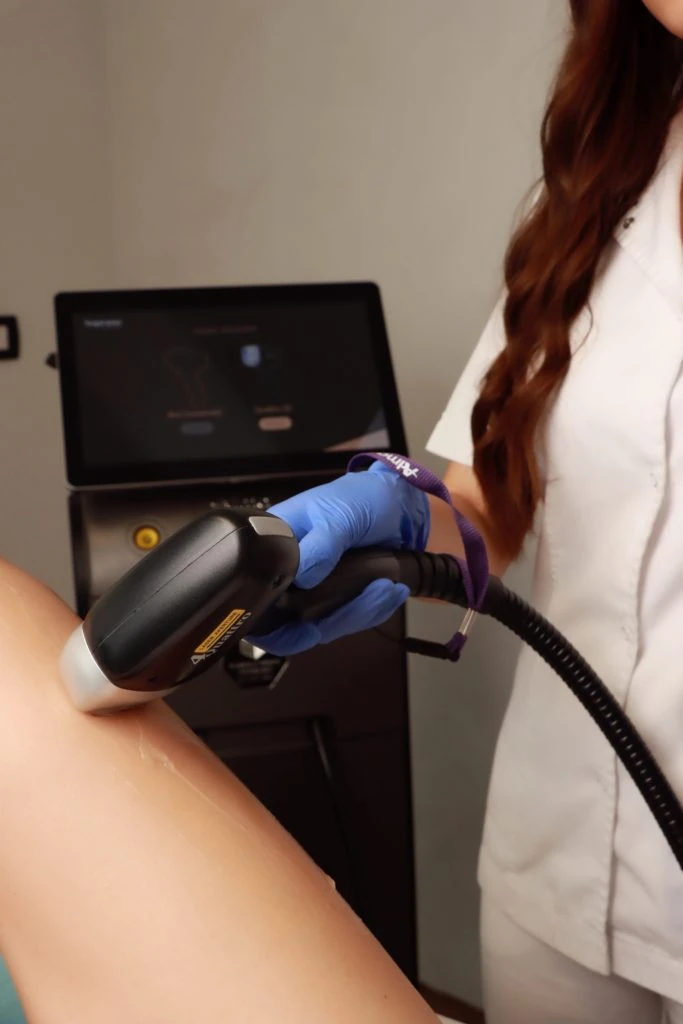
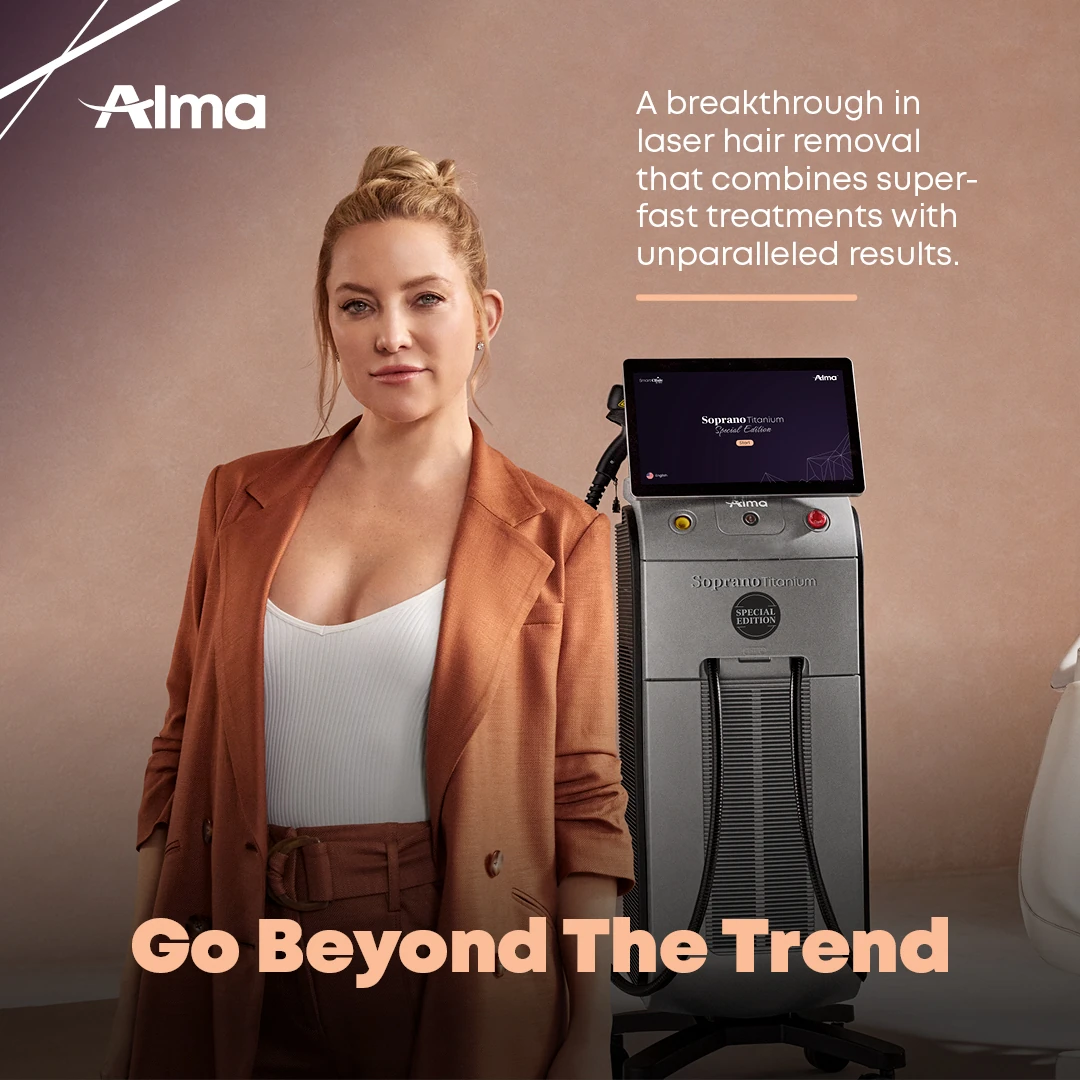
At Rejuva Clinic we use the Alma Soprano Titanium, a diode laser with an advanced cooling system that makes the treatment almost painless and safe on all parts of the body, including the most sensitive intimate area.
Advantages if you are prone to ingrown hairs:
- Removes the cause, not just the consequence — the hair weakens over time and disappears
- Comfortable and quick, with skin cooling during treatment
- Suitable for all skin types and sensitive areas
- No downtime — you go straight back to your daily activities
How the treatment goes: consultation and skin examination, preparation (shave the hair the day before), laser treatment (from a few minutes to half an hour), with no irritation and no break afterwards. For at least 4 weeks before treatment, do not pluck or wax (shaving is allowed).
Number of treatments: a lasting result usually takes 6–8 treatments 6–8 weeks apart. After the first treatment ingrown hairs noticeably decrease and the skin becomes smoother. You can see prices for all treatments in the price list.

Spots and scars from ingrown hairs
Once the laser has addressed the cause, the question of marks remains. The dark spots (post-inflammatory pigmentation) that ingrown hairs leave can be effectively reduced with targeted laser treatments for pigmentation. At the consultation we assess the skin and make a plan that combines long-term hair removal with treatment of existing spots and scars.
How to prevent ingrown hairs
As long as the hair is there, these habits can reduce ingrown hairs:
- Regular gentle exfoliation before shaving
- Shaving with a sharp, clean blade and in the direction of hair growth, with gel or foam
- Hydration the skin after every hair removal
- Avoid tight clothing on areas prone to ingrown hairs
- For a long-term solution — laser hair removal, which makes this whole ritual unnecessary
Ingrown hair — the solution at Rejuva Clinic
At Rejuva Clinic in Dedinje we approach ingrown hairs as a medical, not just a cosmetic, problem. At the consultation we assess skin and hair type, rule out complications and make an individual plan — from long-term laser hair removal to treatment of spots and scars.
If recurring ingrown hairs are bothering you, book a consultation or call us — we will help you restore smooth, healthy-looking skin for the long term.
Frequently asked questions
Can an ingrown hair go away on its own?
A mild ingrown hair often clears up on its own within a few days with care and exfoliation. If it keeps coming back in the same spot, is painful, pus-filled or leaves spots, that is a sign the cause needs a long-term solution.
How to safely remove an ingrown hair at home?
Never pick it with a needle or squeeze it — that is how infection and scars happen. Apply a warm, damp compress and gently exfoliate the skin; if the hair does not come out on its own or the area is inflamed, see a professional.
Is laser hair removal really a long-term solution for ingrown hairs?
Yes. The laser acts on the hair root and disables it over the long term, removing the cause of ingrown hairs. That is why it is recommended for people with frequent ingrown hairs and infections.
How many treatments are needed?
Usually 6–8 treatments 6–8 weeks apart, with a visible reduction in ingrown hairs after the first.
Does the laser hurt?
Alma Soprano Titanium has advanced cooling, so the treatment is almost painless, even in the intimate area.
Can ingrown hairs in the intimate area be treated with a laser?
Yes, it is one of the most common areas. The treatment is safe and almost painless thanks to skin cooling.
What about the dark spots that are left?
Post-inflammatory pigmentation is treated with separate laser treatments for spots; we make the plan at the consultation.



 English
 Serbian