
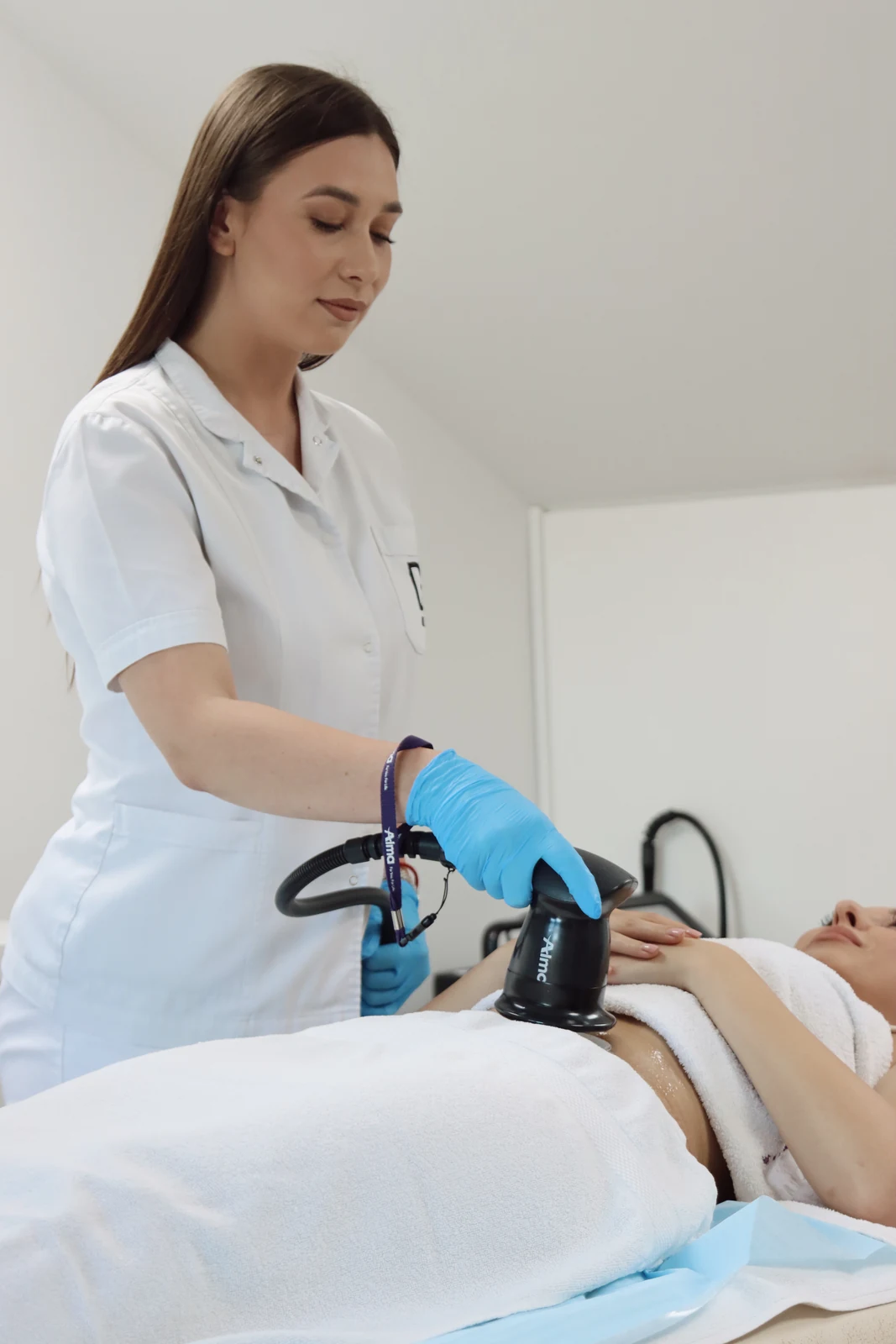
The abdomen is the area patients most often come to us about. And almost always with the same sentence: “I've tried everything — diet, the gym — and the belly is still there.”
That sentence is not an excuse. It is an accurate description of how the body works. But to know what helps, we first have to separate two things that are constantly confused — because only one of them responds to treatments.
Two completely different kinds of belly fat
When you say “belly fat”, you actually mean two different deposits:
1. Visceral fat — it lies deep, around the organs, behind the abdominal wall. You cannot pinch it. It is metabolically active and is linked to insulin resistance, hypertension and cardiovascular risk.
2. Subcutaneous fat — the layer just under the skin, the one you can pinch between your fingers. It is the most visible aesthetically, but metabolically far less harmful.
This is not an academic distinction — it determines what will help you:
- Visceral fat is reduced through lifestyle — a calorie deficit, sleep, stress management and physical activity. No device reaches it, because it lies beneath the muscle wall.
- Subcutaneous fat is what non-invasive treatments act on — and it is usually exactly what bothers you in the mirror.
That is why the first question at the consultation is always: what can you actually pinch? If the belly is firm and protruding but cannot be “pinched” — the problem is visceral and a treatment is not the answer. It is only fair to say so right away.
Why the abdomen in particular
Fat distribution is not a matter of willpower but of biology:
- Hormones. Cortisol (chronic stress, poor sleep) promotes fat storage around the abdomen. Insulin resistance does the same.
- Menopause. As estrogen falls, fat distribution shifts — from the hips and thighs toward the abdomen. That is why the figure changes even though weight has not moved much.
- After childbirth. Three things often come together here: fat deposits, lax skin and a weakened abdominal wall (diastasis). Each needs a different answer.
- Genetics. The number and distribution of fat cells by area is individual and does not change.
Why training and diet don't shift it from there
This is the most important part of the article, and the most common source of frustration.
Spot reduction does not exist. When you go into a calorie deficit, the body uses fat reserves in its own order — and you do not choose that order. A thousand crunches strengthen the muscle underneath, but do not burn the fat above it.
That is why many people — including very disciplined ones — are left with the same deposits: lower abdomen, flanks, inner thighs. These zones have poorer blood supply and a different distribution of receptors on fat cells, so they shrink last. Or not at all.
If you are close to your target weight and that last layer is still there — you are not lacking discipline. You are lacking a tool.
What your concern really is — three scenarios
Before choosing a treatment, establish what dominates:
Scenario A: subcutaneous deposits, good skin.
The classic “last layer” in someone who exercises. The goal is to reduce the fat layer and circumference.
Scenario B: deposits + lax skin.
Most often after weight loss or childbirth. If only the fat is reduced, the skin is left hanging — so the treatment must work on both components at the same time.
Scenario C: a weak or separated abdominal wall (diastasis).
The belly looks rounded even though there is not much fat. Here fat is not the problem — the muscle is. No fat treatment will solve that.
What helps with subcutaneous belly fat
Once the basics are in place (diet, sleep, movement) and a localized layer remains, non-invasive treatments come in.
Alma PrimeX works on both components of scenario B. The guided ultrasound applicator acts selectively on the subcutaneous fat exactly in the zone we target — not on the body as a whole — so the thickness of the fat layer and the circumference decrease. At the same time, unipolar radiofrequency heats the deeper layers of the skin, stimulates new collagen and tightens the skin, so no laxity is left after the reduction.
The effectiveness of this combination was reported in a peer-reviewed study (Urdiales-Gálvez and colleagues, Aesthetic Plastic Surgery, 2022): a statistically significant reduction in fat thickness in the abdomen and flanks, with 86.7% of patients satisfied.
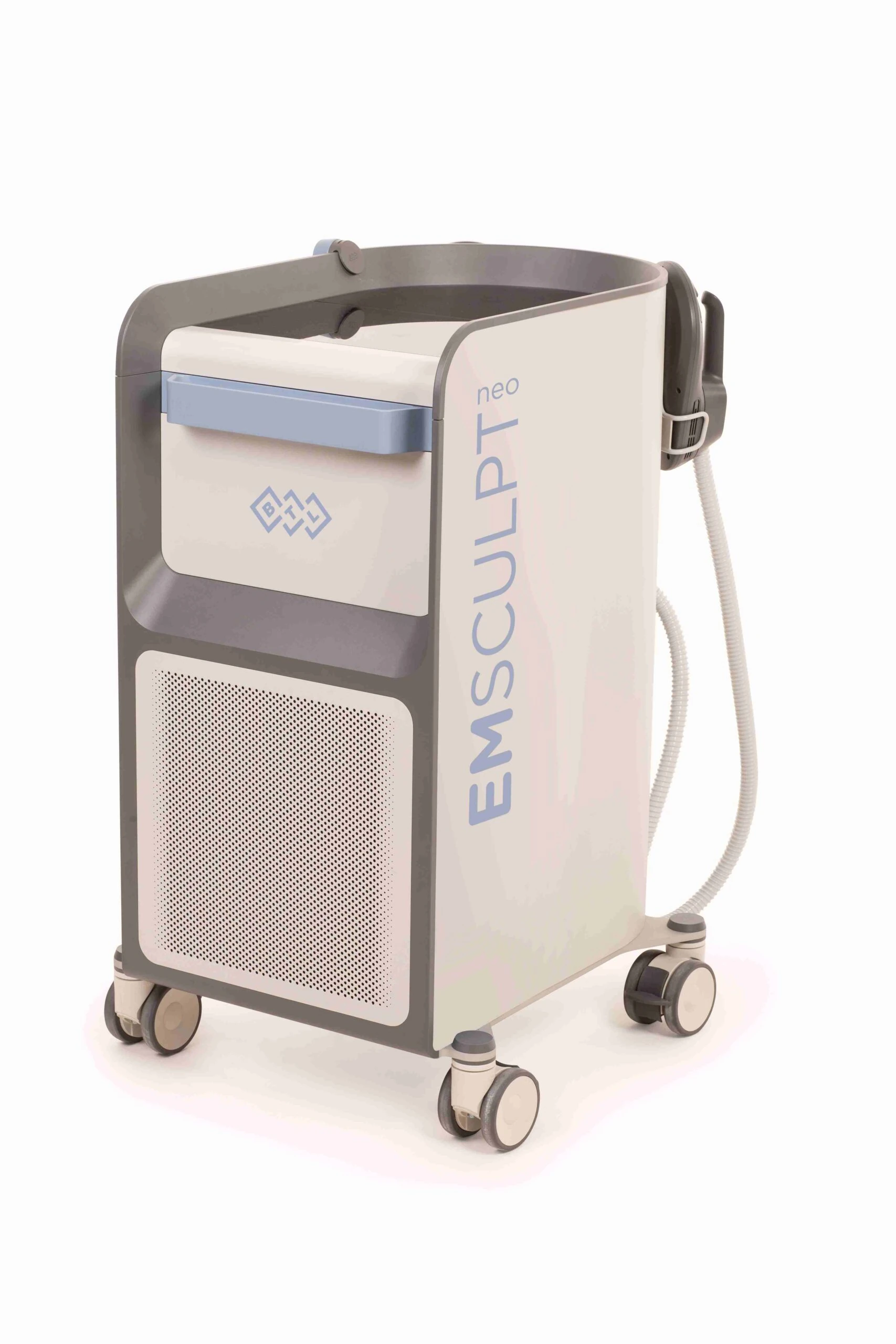
If it is scenario C, the primary treatment is EmSculpt NEO, because it works on the muscle and diastasis. When there is both fat and weak muscle, the two treatments are combined in one protocol, because one device does not address both components of the figure.
What to realistically expect
Non-invasive treatments are not a weight-loss method. They shape and refine the figure in targeted areas, and work best in people with BMI below 30 who have a few stubborn zones.
The first changes in circumference can be visible after the first session, but the full picture comes after a series of 4 to 6 treatments, 7 to 14 days apart. The result continues to develop for up to three months, as the body eliminates fat tissue and forms new collagen.
If you have a date in the calendar — a wedding, a vacation, the end of the year — start at least 4 to 6 weeks before, ideally 8 to 12.
What it looks like in practice: Alma PrimeX experiences and results — before and after.
Frequently asked questions
I exercise regularly and watch what I eat, but my belly still won't budge. Can a treatment help?
Yes — it is one of the most common reasons people come to us. Since spot reduction does not exist, stubborn deposits remain even in very disciplined people. The treatment targets exactly that last layer, and radiofrequency tightens the skin so the muscle work you have put in becomes visible.
Does the treatment also reduce visceral fat?
No. Ultrasound and radiofrequency act on subcutaneous fat. Visceral fat lies beneath the muscle wall and is addressed only through lifestyle. If your belly is firm and protruding and cannot be pinched, we will tell you so at the consultation rather than take you through a series of treatments with no prospect of results.
What if I also have lax skin after childbirth?
That is a common combination. It is important that the treatment works on both components — the fat layer and the skin — because reducing fat without tightening can make laxity look worse.
Do the results last?
With a stable body weight and healthy habits — yes, they are long-lasting. Treatments do not protect against weight gain.
Book a consultation
The fastest way to find out what your case is, is to let us take a look. We measure the area, assess the thickness of the subcutaneous fat layer, the condition of the skin and muscle tone — and tell you honestly what can realistically be achieved, and what cannot. Book an appointment or learn more about the treatment on the page Alma PrimeX — body contouring.
If you are not sure which treatment addresses your scenario, see the guide Body treatments — which to choose?, and prices are in the price list.




 English
 Serbian